Pulps
Ten-cent magazines, fast stories, and the heroes who came back every month.
About this shelf
Pulp magazines printed millions of words of fiction a year on cheap wood-pulp paper. This shelf collects hero pulps such as The Spider, the Phantom Detective and Captain Hazzard, alongside detective fiction like Robert Leslie Bellem's Wired Alibi. Some are transcribed text; others are page scans of the original issues.
Pulp magazines and novels were inexpensive, mass-produced fiction publications that dominated popular reading culture from the late 19th century through the mid-20th century. Named after the cheap wood-pulp paper on which they were printed, they offered readers thrilling escapism through fast-paced adventures, crime dramas, science fiction, and horror.
Pulp magazines emerged in the late 1800s as literacy rates soared and printing technology advanced. The phenomenon officially kicked off in 1896 when Frank A. Munsey converted his struggling literary journal, Argosy, into an all-fiction pulp magazine. By stripping out high-brow articles and focusing entirely on entertaining, gripping stories, Munsey created a massive commercial success that inspired dozens of competitors.
During their peak in the 1920s through the 1940s, pulps became an essential part of American entertainment. They were sold on newsstands with eye-catching, lurid, and brightly colored cover art designed to grab a buyer's attention. Because the pay was low and publishers demanded high volume, pulp writers had to be remarkably prolific. Many legendary authors honed their craft and built their early careers writing for pulps, including Isaac Asimov, Ray Bradbury, Raymond Chandler, Dashiell Hammett, H.P. Lovecraft, and Robert E. Howard.
The pulp era birthed or popularized numerous iconic literary genres and archetypes. It was the birthplace of modern science fiction, hard-boiled detective fiction, fantasy, and superhero precursors like The Shadow and Doc Savage.
The decline of the pulp magazine began during and immediately after World War II due to severe paper rationing, rising production costs, and competition from new forms of mass entertainment, particularly paperback books and television. By the early 1950s, the classic pulp magazine format had largely vanished from newsstands, though its DNA heavily influenced modern genre fiction, comic books, and genre cinema.
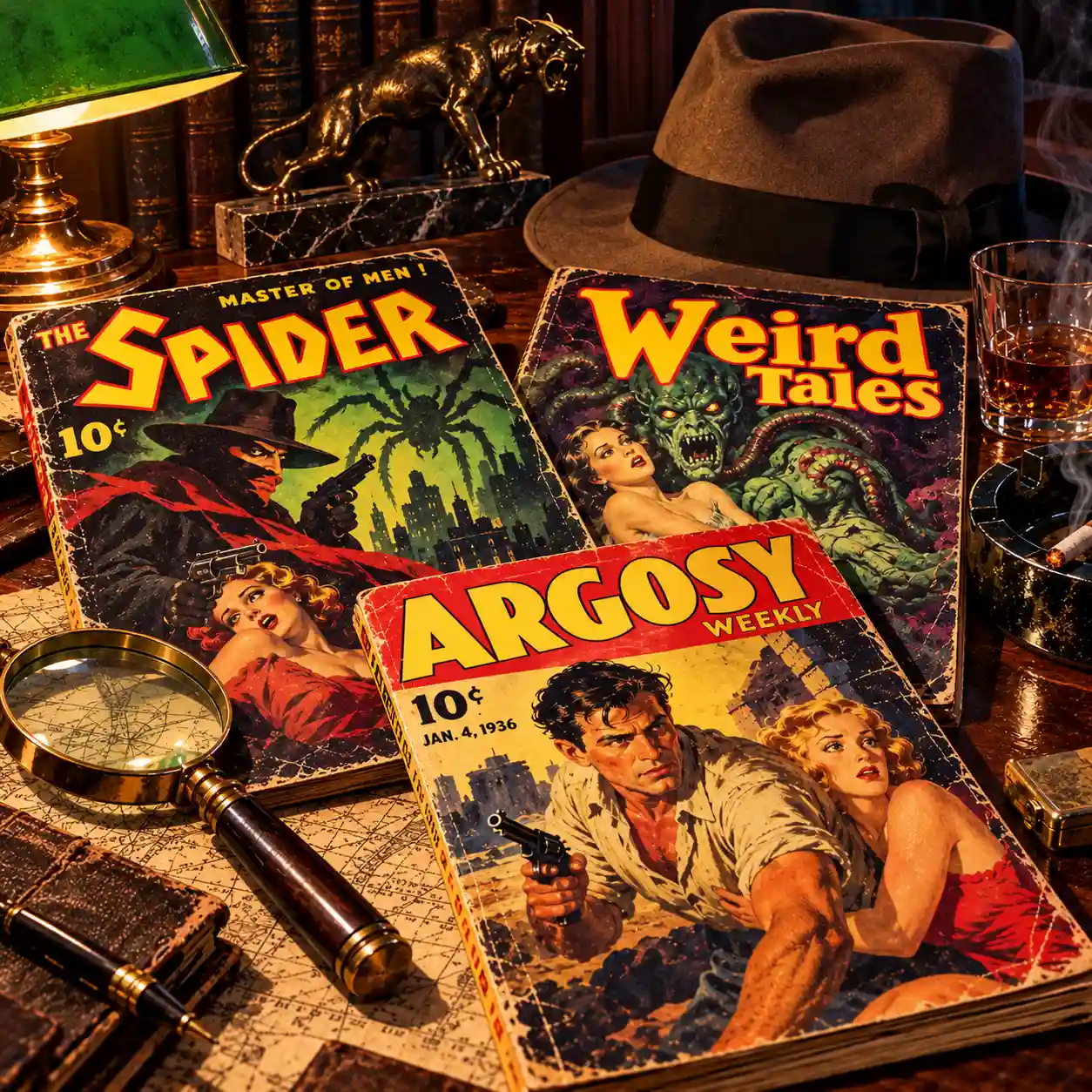
Heroes on a schedule
Characters like the Spider returned issue after issue, each time in a new complete novel.
Issue noted
Entries are labeled with the magazine issue they came from.
Of its time
Texts are reproduced as first published and include language and attitudes of their period that readers today will find offensive.
| No. | Title | Author | Year | Read |
|---|---|---|---|---|
| 01 | Captain Hazzard - Mar. 1938 | — | 1938 | Read → |
| 02 | Hooded Detective - Jan. 1942 | Various | 1942 | Read → |
| 03 | Phantom Detective - Apr. 1941 | — | 1941 | Read → |
| 04 | Phantom Detective - May. 1941 | — | 1941 | Read → |
| 05 | The Spider Strikes | Popular Publications | 1933 | Read → |
| 06 | The Spider - Nov. 1933 (RTF) | — | 1933 | Read → |
| 07 | The Spider - Dec. 1933 (RTF) | — | 1933 | Read → |
| 08 | Wired Alibi | — | 1948 | Read → |